
When homeowners start researching heating systems, one of the most common questions is the difference between hydronic heating and forced hot air.
In New England, both systems are common. We work primarily with hydronic heating systems, and many homeowners are surprised to learn how differently these systems operate.
Understanding the basics can help you better understand your home’s heating equipment and make more informed decisions when repairs or replacements become necessary.
What Is Hydronic Heating?
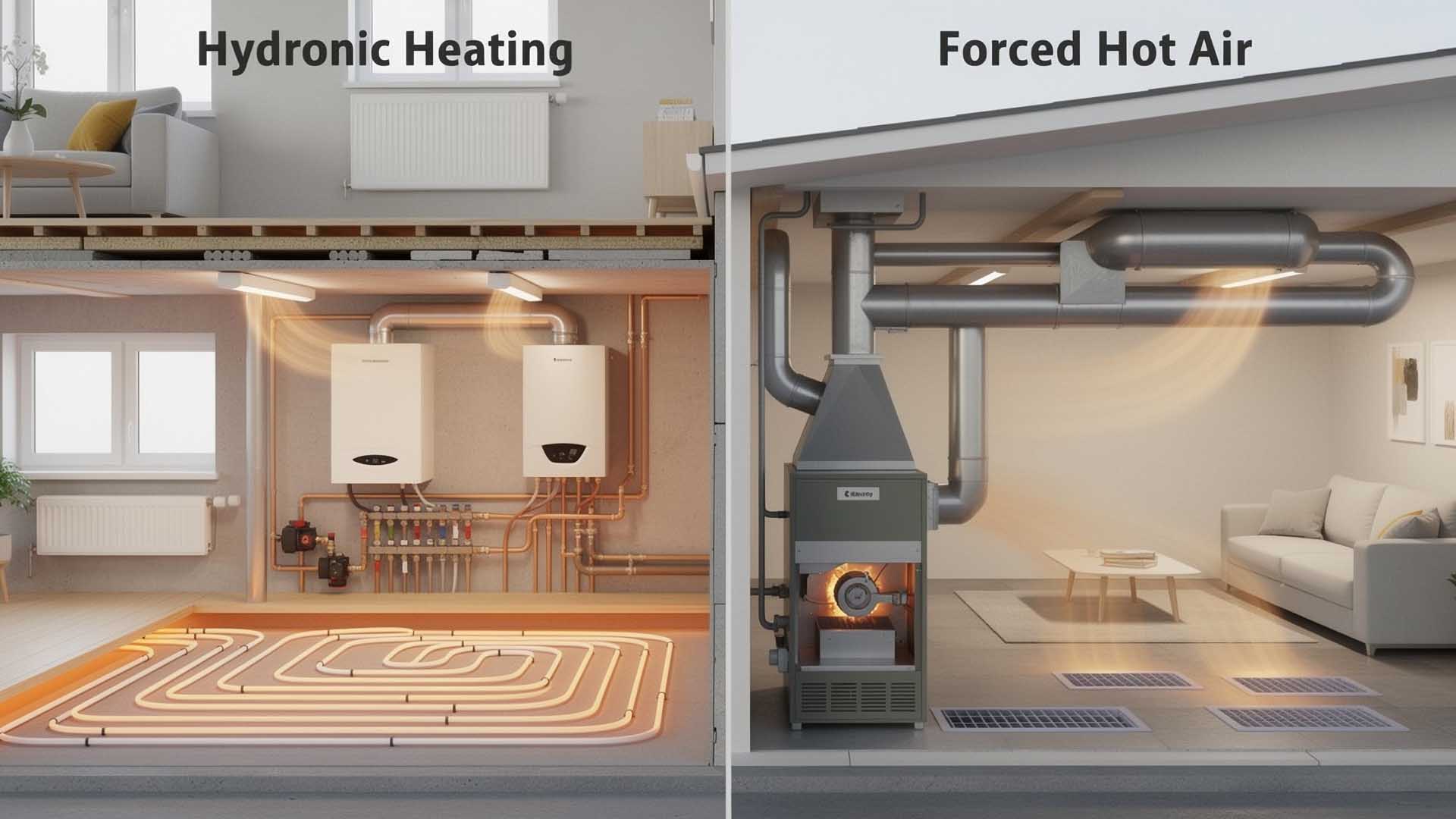
Hydronic heating uses hot water to heat your home.
The heated water travels through a system of pipes and is distributed through baseboard heating, radiant heating systems, or hot water radiators.
When people refer to boiler heat, they’re generally talking about a hydronic heating system.
This type of heating has been used throughout New England for generations and remains common in many homes today.
What Is Forced Hot Air?
Forced hot air systems operate differently.
Instead of heating water, the system heats air and distributes it throughout the home using ductwork.
When many people think of traditional HVAC systems, they are usually thinking about forced hot air systems.
The heated air travels through ducts and enters rooms through vents located throughout the house.
Why Many Homeowners Prefer Hydronic Heat
One of the biggest advantages of hydronic heating is comfort.
We often explain to homeowners that hydronic systems provide a more even heat throughout the home. Rather than blowing heated air into rooms, the warmth is delivered through hot water circulating through the system.
Many homeowners appreciate the consistent heating that hydronic systems provide, especially during long New England winters.
Less Air Movement Means Less Dust
Another benefit of hydronic heating is that it doesn’t rely on moving air through ductwork.
With forced hot air systems, dust, allergens, and other particles can be circulated throughout the house as air moves through the ducts.
Hydronic systems don’t operate that way because they use water rather than moving heated air from room to room.
For homeowners concerned about dust circulation, this is often a feature they appreciate.
What We Commonly See in New England
Many New England homes still rely on boiler heat, while others use forced hot air systems.
In our experience, it’s fairly evenly split between the two.
In many cases, the heating system a homeowner has today is simply the system that was originally installed when the house was built. Once a home has baseboards, radiators, or ductwork in place, future heating equipment is often selected around that existing infrastructure.
Can Heat Pumps Replace Boiler Systems?
One topic that comes up frequently today is ductless heat pumps.
Many homeowners hear that heat pumps can replace traditional heating systems entirely. While they can be a valuable part of a home’s comfort system, New England winters create unique challenges.
The extremely cold temperatures we experience can affect heating performance during the coldest days of the year.
We regularly talk with homeowners about understanding the limitations and capabilities of different heating technologies so they can make informed decisions based on their specific home and heating needs.
Choosing the Right System
Every home is different.
The size of the home, existing infrastructure, heating requirements, and homeowner preferences all play a role in determining what heating solution makes the most sense.
The important thing is understanding how your current system operates and making sure it is properly maintained and professionally installed.
Whether a home uses baseboard heat, radiators, radiant heat, or another hydronic system, proper design and installation have a significant impact on comfort and efficiency.
Final Thoughts
Hydronic heating and forced hot air systems both serve the same purpose, but they achieve it in very different ways.
Hydronic systems use hot water delivered through baseboards, radiators, or radiant heat, while forced hot air systems use ductwork to distribute heated air throughout the home.
Understanding those differences can help homeowners make better decisions about maintenance, repairs, and future heating upgrades.
If you’re unsure how your heating system works or whether it’s operating efficiently, taking the time to learn about your equipment can help you make more informed decisions about your home’s comfort and heating costs.
FAQs
How can I tell if my home has hydronic heating?
If your home is heated by baseboards, radiators, radiant floor heating, or a boiler, you likely have a hydronic heating system that uses hot water to distribute heat.
Does hydronic heating improve indoor comfort?
Many homeowners find that hydronic heating provides more consistent and even warmth because heat is delivered through hot water rather than blown air.
Do forced hot air systems require ductwork?
Yes. Forced hot air systems use a network of ducts and vents to distribute heated air throughout the home.
Can a heat pump replace a boiler in New England?
Heat pumps can be an effective heating option for many homes, but performance can vary during extremely cold New England weather. The best solution depends on your home’s layout, insulation, and heating requirements.
